Leaf springs are a fundamental component of many vehicle suspension systems, especially in trucks, trailers, and some older cars. Understanding the basics of leaf springs helps in appreciating their role in vehicle dynamics and load management.
How Leaf Springs Work
load Bearing: When a vehicle is loaded, the leaf spring compresses and flexes to absorb the weight, distributing the load across the axle. This helps prevent overloading of the chassis and maintains vehicle stability.
Shock Absorption: As the vehicle moves over uneven surfaces, the leaf springs flex to absorb the shocks and bumps, providing a smoother ride.
Tension and Compression: The leaves work together to manage tension and compression. The top leaves handle more tension, while the lower leaves absorb more compression, creating a balanced and efficient suspension system.
Components of a Leaf Spring Assembly
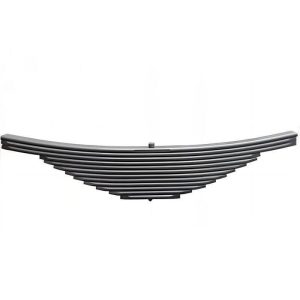
Master Leaf: The longest and most crucial leaf in the assembly, it forms the base and provides the main structural support.
Leaves: Additional leaves below the master leaf, each shorter than the one above it, add strength and flexibility to the spring.
Center Bolt: A bolt that holds the leaves together and connects the spring to the axle.
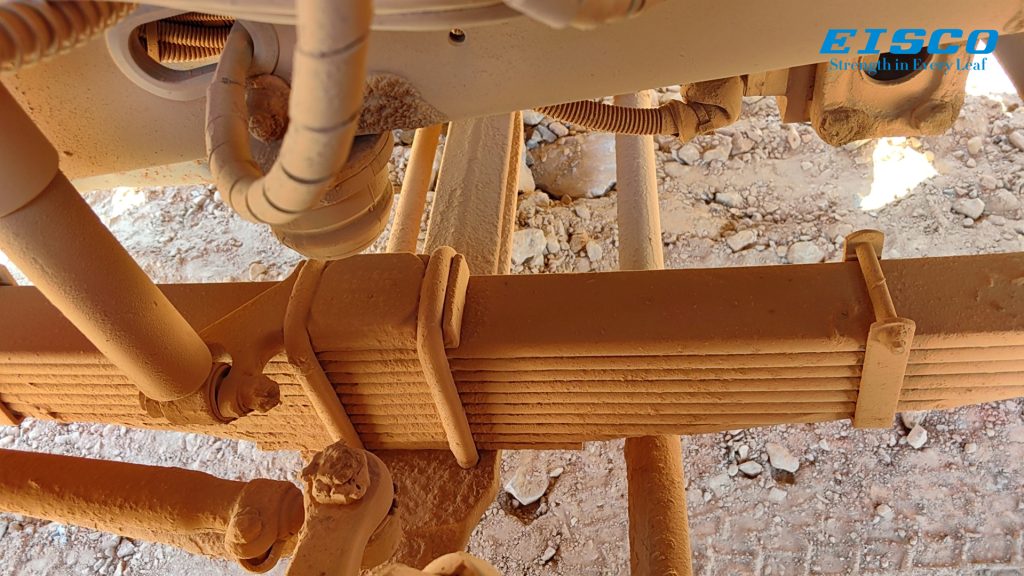
Clamps: Metal clips that hold the leaves in alignment and prevent them from shifting during operation.
Eyelets: The ends of the master leaf are often rolled into circular shapes, called eyelets, which are used to attach the leaf spring to the vehicle’s frame.
Eisco leaf springs : Your reliable leaf springs supplier from China since year 1962.
Call us or whatsapp us at wa.me/+8615811844791