Leaf springs are one of the oldest and most reliable suspension systems used in various vehicles, ranging from cars to trucks and even trailers. These springs consist of multiple layers or leaves of metal that are stacked together to form a flexible and durable suspension component. The design and configuration of leaf springs can vary significantly, each with its unique characteristics and applications. In this article, we will explore the different types of leaf springs, their designs, and their specific applications in the automotive industry.
Single-leaf Springs
Single-leaf springs, also known as mono-leaf springs, are the simplest type of leaf springs. They consist of a single curved or tapered metal leaf, which provides suspension support to the vehicle. Single-leaf springs are commonly found in smaller vehicles or light-duty applications where load capacity and flexibility are not the primary concerns. They are relatively inexpensive to produce and offer a simple suspension solution. However, they have limited load-carrying capabilities and can result in a harsher ride due to their limited flexibility.

Multi-leaf Springs(often said: conventional leaf springs)
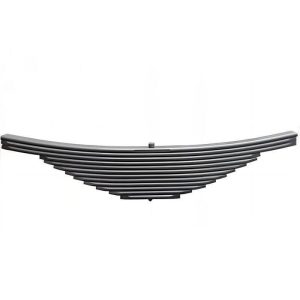
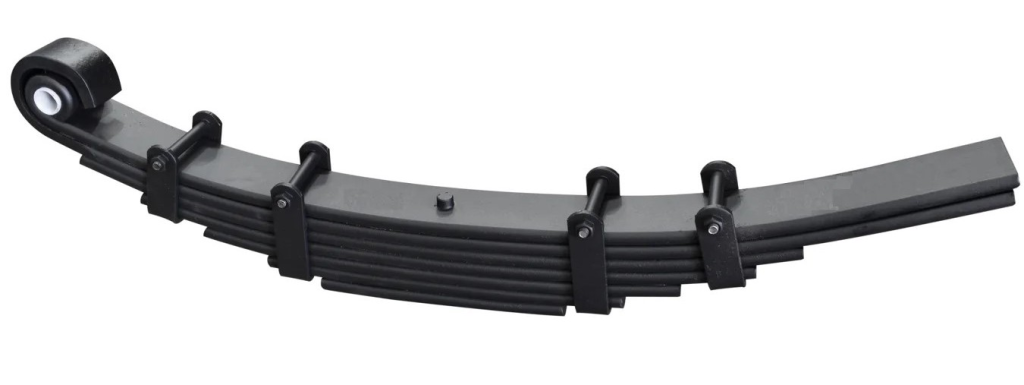
Multi-leaf springs are the most commonly used type of leaf springs in various vehicles. They consist of multiple leaves of varying lengths, thicknesses, and shapes, stacked together and held in place by a center bolt. The leaves are progressively longer from the center to the outer edges, with the longest leaf known as the main leaf or master leaf. The additional leaves, known as helper leaves or secondary leaves, provide additional support and flexibility to the suspension system.
Multi-leaf springs offer better load-carrying capacity and improved ride quality compared to single-leaf springs. The number of leaves and their thicknesses can be adjusted to meet the specific requirements of different vehicles. Heavy-duty trucks and commercial vehicles often utilize multi-leaf springs due to their ability to handle significant loads. These springs can effectively distribute weight and provide stability, making them suitable for applications that involve hauling or towing heavy loads.

Parabolic Springs
Parabolic springs are a modern variation of leaf springs that offer several advantages over traditional multi-leaf springs. Instead of using uniformly tapered leaves, parabolic springs feature leaves that are tapered more toward the center and become progressively thinner towards the edges. This design creates a parabolic shape, hence the name.
One significant advantage of parabolic springs is their ability to provide a smoother ride and improved shock absorption compared to other leaf spring designs. The parabolic shape allows the leaves to flex more evenly and gradually, resulting in reduced vibrations and enhanced comfort for passengers. Additionally, parabolic springs are lighter in weight compared to conventional multi-leaf springs, which can contribute to improved fuel efficiency.
Parabolic springs find applications in various vehicles, including passenger cars, light trucks, and SUVs. They are especially favored in off-road vehicles and recreational vehicles, where ride quality and durability are essential factors. The enhanced flexibility and load-carrying capacity of parabolic springs make them suitable for traversing uneven terrains and providing stability in demanding off-road conditions.

Eisco Leaf Spring offers leaf springs come in various types and designs to meet the specific needs of different vehicles and applications. Single-leaf springs offer simplicity and cost-effectiveness, while multi-leaf springs provide improved load-carrying capacity and ride quality. Parabolic springs offer enhanced comfort and shock absorption, making them ideal for off-road vehicles.
Understanding the different types of leaf springs helps automotive engineers and enthusiasts make informed decisions regarding suspension systems. The choice of leaf spring design depends on factors such as the intended use, load requirements, ride quality preferences, and vehicle specifications.Leaf springs continue to be a reliable and widely used suspension system in various vehicles, showcasing their enduring legacy in the automotive industry.