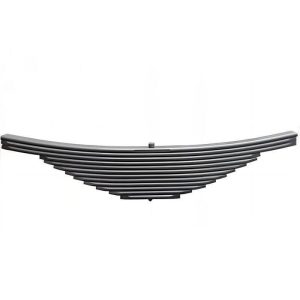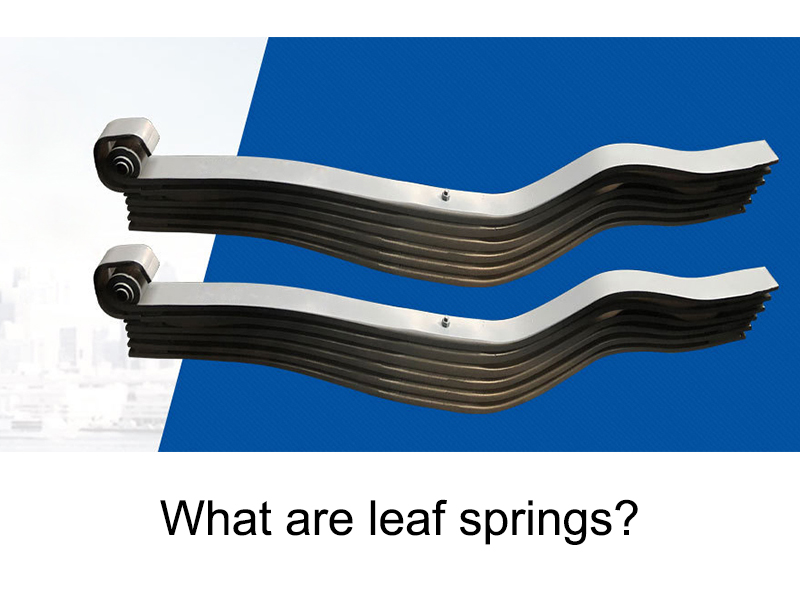
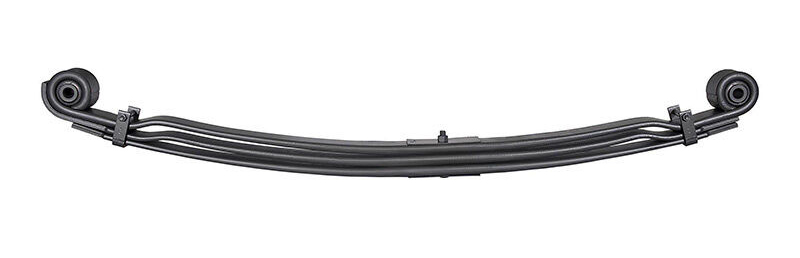
Leaf springs are a type of suspension system used in vehicles. They consist of one or more flat, arc-shaped pieces of metal (usually steel) stacked on top of each other and secured together. These pieces are known as “leaves.” The primary function of leaf springs is to absorb and distribute the shock and vibrations from the road, providing a smoother ride for the vehicle.
Key Features of Leaf Springs:
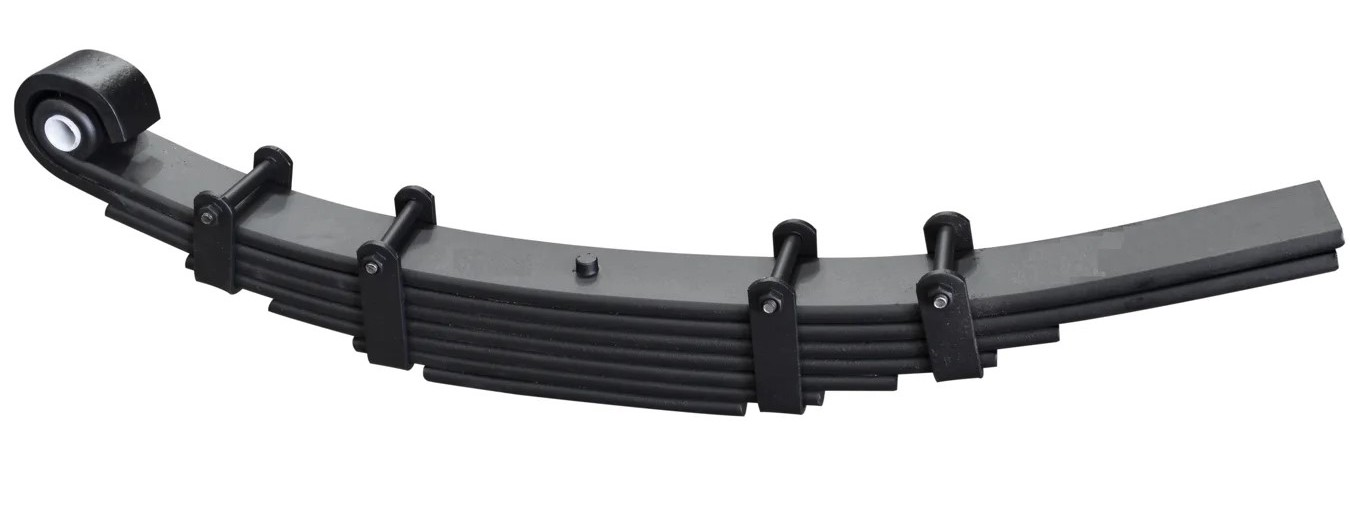
- Structure: A leaf spring is composed of several layers of metal, with each layer referred to as a “leaf.” The leaves are held together by metal clips and bolts.
- Function: They support the vehicle’s weight, control the ride height, and maintain the alignment of the wheels.
- Applications: Leaf springs are commonly used in heavy-duty vehicles like trucks, vans, and SUVs, as well as in some light-duty vehicles and older passenger cars.
- Advantages:
- Simple and robust design
- Capable of handling heavy loads
- Low maintenance requirements
- Cost-effective compared to other suspension systems
- Disadvantages:
- Less comfortable ride compared to modern suspension systems like coil springs
- Less flexibility in tuning for specific ride characteristics
- Can be heavier than other suspension types
Types of Leaf Springs:
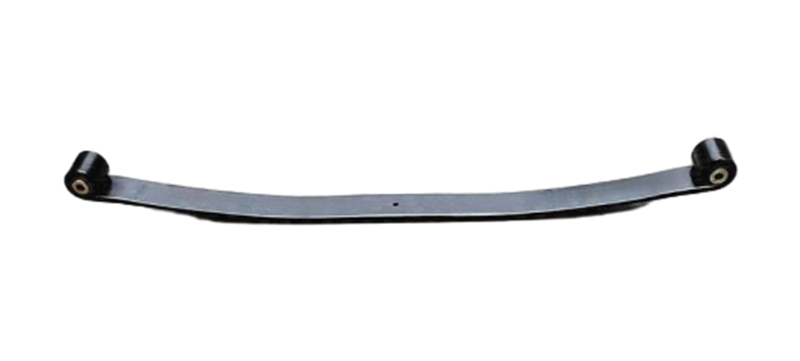
- Mono-leaf Springs: Consist of a single, thick leaf. They are less common and typically used in light-duty applications.
- Multi-leaf Springs: Consist of multiple leaves of varying lengths. These are more common in heavy-duty applications due to their ability to handle greater loads.
- Parabolic Springs: A type of multi-leaf spring with leaves of varying thickness, shaped to provide a more progressive spring rate, improving ride quality.
Leaf springs have been used for centuries and, despite being somewhat outdated in modern passenger cars, they remain popular in many heavy-duty and off-road applications due to their strength and simplicity.